Mexico Entry Requirements: Passport, FMM Tourist Card, Customs

In this guide
For a normal tourist trip you need a passport that is valid when you arrive, and one thing from Mexican immigration called the FMM (Forma Migratoria Múltiple, the “tourist card”). If you fly in, the FMM is now digital and issued at the airport: no paper form, no pre-registration, just the immigration desk. The officer decides how long you can stay, up to 180 days, and stamps the date into your passport. Everything else in this guide is detail on the fee, the land-border exceptions, and what customs will and will not let through.
This guide reflects official pages we read in October 2026 (US State Department, Mexico’s Instituto Nacional de Migración, and customs guidance). Rules and fees change often, so confirm anything that affects your trip on the official pages linked below before you fly.
Entry requirements at a glance
| Item | What to know (as of October 2026) |
|---|---|
| Passport | Book required for flights; must be valid at entry (US State Department). Airlines say it must cover your stay. |
| Visa | Not needed for US citizens for stays up to 180 days. Other nationalities should check INM’s visa-exempt list. |
| FMM (tourist card) | Digital at airports (FMMd). Up to 180 days, one entry, no permission to work. |
| Non-resident fee (DNR) | Reported at 983 MXN (about 55 USD) in 2026; usually inside the airfare. |
| Cash | Declare more than 10,000 USD entering or leaving. |
| Customs | Declare goods worth over 500 USD by air or 300 USD by land. No vapes. |
| Return ticket | Officers may ask for a return or onward ticket, hotel booking or itinerary. |
Passport: what counts and how much validity
If you fly to Mexico you need a passport book. The US State Department states that a US passport card cannot be used to board a plane to Mexico, although it works for land crossings. For validity, the State Department’s wording is that the passport must be valid at the time of entry, and it asks for one blank page per stamp for air travelers. Airlines are stricter in how they phrase it: Volaris, for one, says the passport must be valid for the whole period of stay.
Mexico itself does not publish a six-month rule in the pages we read, but airlines and countries you connect through might apply their own, so it is cheap insurance to carry a passport with at least six months left. If you are changing planes through the United States or another country, check the transit rules for that country as well.
The FMM, explained
The FMM is the document that proves you are in Mexico legally as a visitor. It is issued under a status called “visitor without permission to work”: you can tour, visit relatives, do business meetings and similar activities, but you cannot take a paid job. Mexico’s online FMM form lists three facts worth memorizing: it is valid for a maximum of 180 calendar days, it works for one entry, and the clock starts when the migration stamp is placed in your passport, not when you buy your ticket.
If you arrive by air
Air arrivals go through the digital version, called the FMMd. According to Mexico’s INM, there is no paper form for air travelers: the officer reviews your passport, decides your length of stay, and stamps in the entry date and an estimated departure date. At many airports you may be sent through a self-service E-gate that prints a receipt with a QR code.
You can download your FMMd one time, within the days granted, by scanning the QR code at the immigration desk or by visiting the INM service portal afterwards. Do it in the first days of your trip, save the PDF and take a screenshot, because the INM says the download can be done only once. Photograph your passport stamp as well, since the stamp date is the number that matters.
Check the days. The US State Department notes that the officer decides your stay. The stamp can show fewer than 180 days. If you plan a long trip, ask the officer politely for the full period at the desk and look at the date before you walk away.
If you arrive by land
By land you need proof of citizenship (a passport book or card for US citizens) and an FMM, which you can request on the INM’s online form or at an INM office near the border. The online form asks for personal details, passport data, the entry point and a Mexican address, then sends you to the INM service portal to pay.
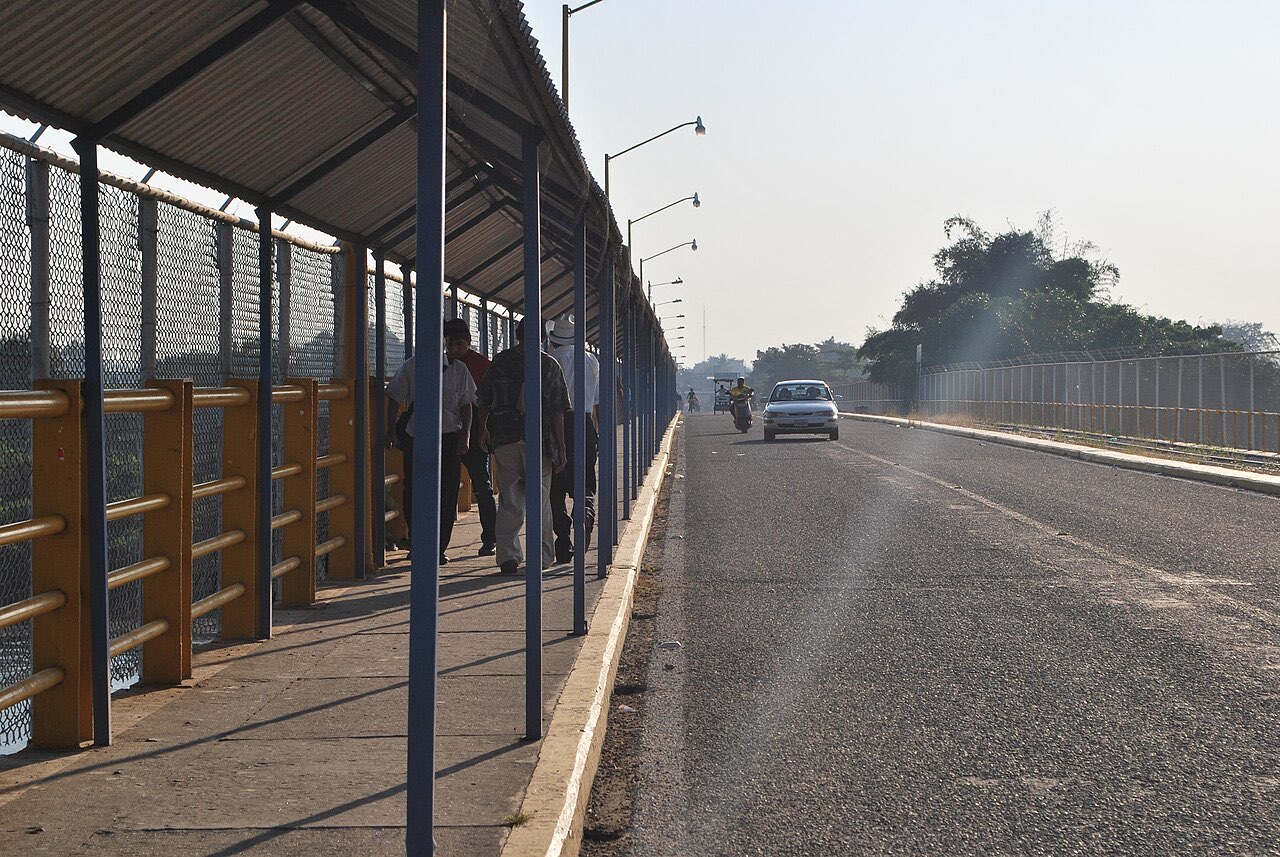
There is one important exception: the State Department says you do not need an FMM if you are staying within about 20 km (12 miles) of the US border for 6 days or less. That covers a day trip to Tijuana or a weekend in Nogales. If you plan to drive deeper, you also need a temporary vehicle import permit from Banjercito, with a refundable deposit, except in the “hassle-free zones” in Baja California, Baja California Sur and Sonora. Our Mexico driving guide covers the road side of this.
The fee: DNR, and who actually pays it
The government charges visitors a non-resident fee (Derecho de No Residente, DNR). The Mexican newspaper Proceso reported in October 2026, citing the Federal Duties Law, that the fee in force for 2026 is 983 MXN per visitor (roughly 55 USD at recent exchange rates), and that a 2027 increase to 1,158 MXN was approved in committee but still working through the legislature. Treat those numbers as the latest reported, not guaranteed.
In practice:
- Air: the airline normally collects the DNR inside the ticket price, so most visitors never pay at the immigration desk. Airlines only exempt passengers with a Mexican passport or Mexican temporary or permanent residence. Check that your fare breakdown lists it, and keep your receipt.
- Land, up to 7 days: exempt under the Federal Duties Law, according to Proceso.
- Land, more than 7 days: the fee is due when you leave the country, according to the same report.
- Cash: the INM says all migration payments are electronic or bank-based, never in cash to INM staff. If someone asks you for cash at a desk, that is not how the INM says it works.
Be careful with websites offering to “process your FMM” for a service fee. For land arrivals, the official request form is on inm.gob.mx. Our money guide explains how to avoid unnecessary fees on the cash side of your trip.
What immigration may ask you
The fee does not guarantee entry. The INM’s own form says that paying does not guarantee that you will be allowed in, and the final decision is made at the desk. According to reporting on the rules, officers can ask for a hotel reservation, a return ticket or an itinerary showing why you are visiting. The State Department also notes that a criminal history or charges can be a reason for denied entry. Keep these handy on your phone or in print:
- Your return or onward ticket (airlines also like to see one, preferably a flight).
- The address of your first night’s lodging.
- A rough plan of where you are going.
Answer plainly and truthfully. The days on your stamp come from this short conversation.
Customs: what you can bring
Customs is separate from immigration. After you collect your bags you will usually pass a light or “red-green” check. The State Department’s summary of Mexico’s customs agency rules says:
- Declare goods worth more than 500 USD if you arrive by air or 300 USD by land, including used goods and gifts.
- Mexican regulations allow tax-free import of one portable computer (laptop or tablet) per person. Extra devices may be taxed, up to roughly 19% of value, although this is not always enforced.
- Vaping devices and e-cigarettes are illegal to bring in and can be confiscated.
- Drugs are illegal, including medical marijuana. Bring prescription medicines in their original packaging, and check the rules for controlled medications with Mexico’s health regulator, COFEPRIS, before you travel.
- Weapons, ammunition, knives, swords and fireworks need permits.
- Cash: declare anything above 10,000 USD (or equivalent) when entering or leaving.
Mexico’s customs agency, ANAM, runs a traveler tool called Aduana Fácil, and a customs help line at 079, for declaring goods and checking requirements.
Traveling with children
Bring a copy of each child’s birth certificate or other proof of your relationship. The State Department says Mexican minors, including those with dual nationality, need notarized written permission from a parent or guardian to travel without that parent or guardian, otherwise proof of sole custody. If a child travels with only one parent, a signed note from the other is a cheap safeguard even when it is not strictly required, so ask your airline what it wants to see.
Mistakes to avoid
- Not looking at the stamp. The date next to it is your legal limit, not 180 days.
- Skipping the FMMd download. You get one shot at it, within the days granted. Do it while you still have a good connection.
- Packing a vape. It is illegal to import and an easy way to start an expensive conversation at customs.
- Assuming the border-zone rule covers your road trip. The exemption is for short visits within about 20 km of the US border, not for the Baja or Sonora interior.
- Paying a stranger for the FMM. Use the INM’s own pages. If you hit a snag, the INM lists a helpline at 800 0046 264.
Before you go
Check the State Department’s Mexico country page for the latest safety advisory, which was Level 2 (“exercise increased caution”) as of its May 2026 issue, and read our Mexico safety guide for region-by-region context. A travel insurance policy is worth considering for a trip of any length, and our Mexico travel insurance guide explains what to look for. If you land in Mexico City, our airport-to-city guide covers the last leg of the journey, and our eSIM and SIM card guide explains how to get a working phone, including the new line-registration rule.
Frequently asked questions
Do I need to fill out an FMM before flying to Mexico?
Not on paper. For air arrivals Mexico now issues a digital FMM (FMMd) at the airport, so there is no form to print or fill out beforehand. The immigration officer decides how many days you get, stamps your passport, and you can download a record of the FMMd once afterwards, either by scanning the QR code at immigration or on the INM portal.
How long can I stay in Mexico as a tourist?
Up to 180 days. The law caps the FMM at 180 calendar days for a single entry, but the officer decides the actual number, so check the date written next to your stamp. If your trip is longer than the days you were given, ask the officer at the desk, not afterwards.
Do I have to pay to get the FMM?
Visitors pay a non-resident fee (DNR). The amount reported for 2026 is 983 MXN per person (about 55 USD), and a 2027 increase is under review. Airlines normally collect it inside the ticket price, so you usually pay nothing at the airport. By land, entries of up to 7 days are exempt, and longer stays pay when leaving. Never pay cash to INM staff, because the INM says payments are electronic or bank-based only.
Does my passport need six months of validity for Mexico?
The sources we checked do not set a six-month rule. The US State Department says the passport must be valid at the time of entry, and airlines say it must cover your stay. Many travelers still bring at least six months of validity as a buffer, because airline check-in agents apply their own checks and renewing mid-trip is a headache.
Can I bring my vape or e-cigarette into Mexico?
No. Importing e-cigarettes and vaping liquids is illegal, and customs can confiscate them, which can lead to delays, fines or criminal charges according to the US State Department. Leave vaping devices at home.
Keep planning
- Best Time to Visit Mexico: Regions, Seasons, and Hurricanes
Best time to visit Mexico by region: the dry season (November-April) suits most trips; learn the hurricane dates for the Caribbean and Pacific coasts.
Updated Oct 2026 - Is Mexico Safe for Tourists? An Honest Regional Breakdown
A non-alarmist look at safety in Mexico — how risk varies by region, what US advisories actually mean, taxi and ATM precautions, and the scams to know.
Updated Oct 2026 - Mexico City Airport (AICM) to the City: Metro, Metrobús, Uber, Taxi
How to get from Mexico City airport (AICM) to the center: Metrobús Line 4 for 30 MXN, Metro, Uber or DiDi, authorized taxis, plus the AIFA train and traffic tips.
Updated Oct 2026